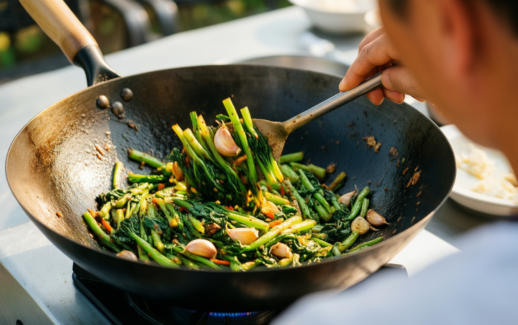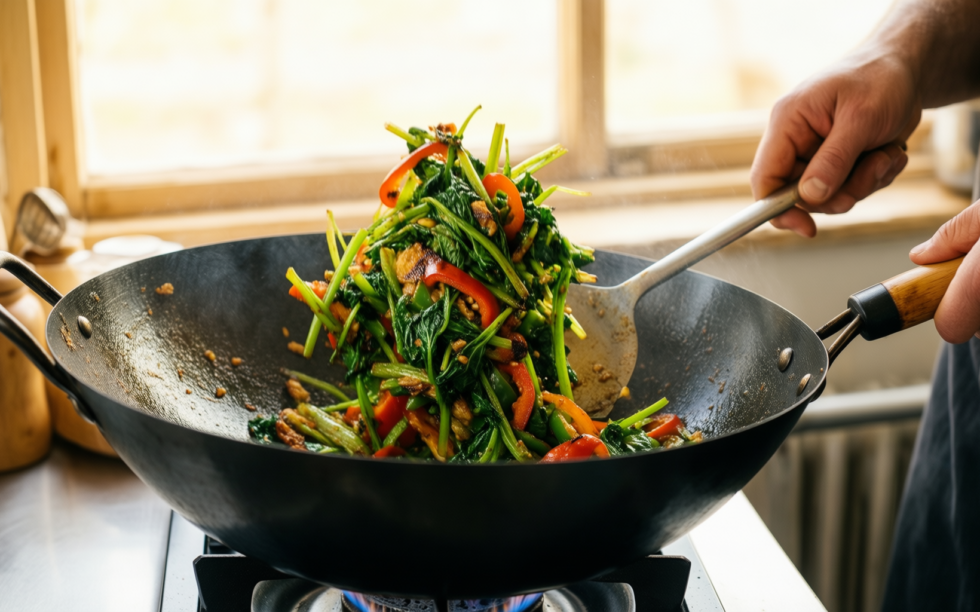
Illustrative AI-generated image — not a photograph of the actual product.
Carbon Steel Wok by YOSUKATA

Disclosure: As an Amazon Associate, we earn from qualifying purchases.
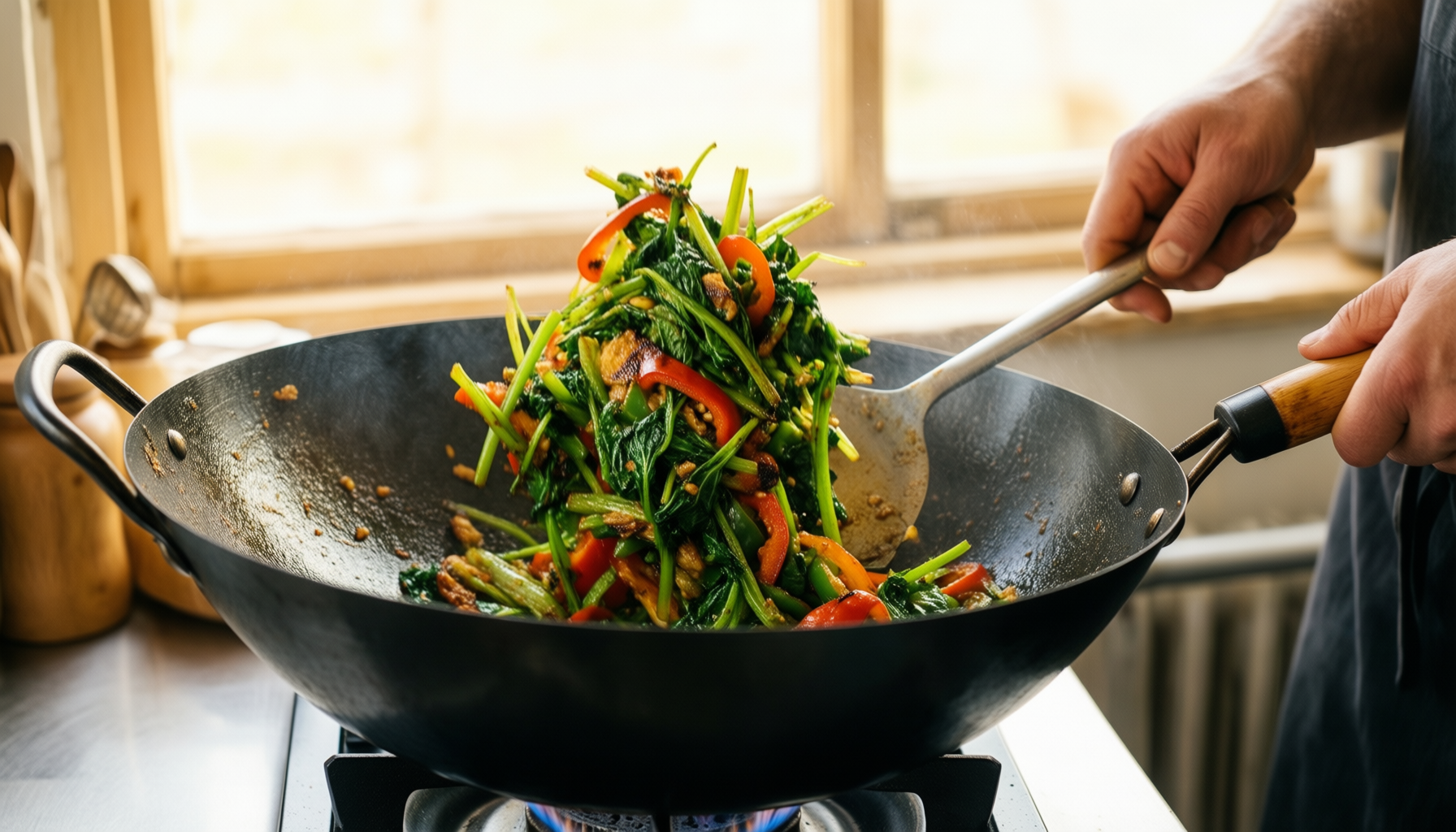
This 36 cm carbon steel wok from YOSUKATA is designed to bridge the gap between traditional Asian cooking methods and modern home kitchens. It solves the common problem of finding a pan that can handle high-heat searing without warping or rusting, specifically for those who cook on gas stovetops or over open flames. The standout feature is its pre-seasoned powder coating that creates a natural non-stick surface without relying on synthetic chemicals, while the honest limitation is that it requires regular seasoning maintenance to maintain its performance over time. This tool is best for home cooks who want the durability and heat response of cast iron but need something lighter and faster for stir-frying.
🛒 Check Price on Amazon →✓ See today's price & reviews
What Makes This Worth Buying
The decision to choose a carbon steel wok over non-stick alternatives often comes down to the fundamental physics of heat transfer and the longevity of the cookware. While many modern pans rely on thin layers of Teflon or similar coatings that degrade quickly under high heat, this YOSUKATA model utilizes solid carbon steel that responds almost instantly to temperature changes. This responsiveness is critical for achieving the Maillard reaction—the browning process that develops complex flavors in meats and vegetables—because the surface temperature can be raised rapidly without the risk of hot spots that plague thinner aluminum pans.
The construction of the round bottom distinguishes this specific model, as it is engineered specifically for use on gas burners, open fires, and BBQ grills. Unlike flat-bottomed woks that sit awkwardly on a gas flame, the curvature allows the entire base to make contact with the heat source, maximizing efficiency. In practical application, this design enables searing a piece of chicken breast or stir-frying vegetables with significantly less fuel or gas usage compared to a flat pan, as the heat is not wasted into the air. The material itself is thick enough to retain heat effectively once it reaches the desired temperature, yet thin enough to allow for that characteristic “wok hei” or breath of the wok that chefs prize so highly.
However, the value proposition extends beyond just the cooking surface. The pre-seasoned powder coating applied to the interior provides an immediate non-stick capability right out of the box, which is a significant convenience for beginners who might be intimidated by the initial seasoning process required for raw carbon steel. You do not need to burn oil into the pan for hours before your first meal. Yet, it is important to understand that this coating is a starting point, not a permanent shield. It behaves more like seasoned cast iron than a factory-applied non-stick layer, meaning it will develop a deeper, more durable patina the more you use it, provided you follow the basic rules of maintenance like avoiding soap and high-heat cleaning.
Real Kitchen Performance
Testing this wok in a home kitchen environment reveals how its materials translate into actual cooking results. The most improvement occurs when cooking proteins like beef or pork. Because the carbon steel heats up so quickly and maintains a consistent surface temperature, proteins develop a deep, golden-brown crust without sticking, even when there is no oil initially on the surface. This is a stark contrast to non-stick pans where the coating can break down if too much oil is used or if the heat is too high, often leading to a greasy texture rather than a crisp one.
The round bottom design also influences the cooking technique in a way that flat pans cannot replicate. When ingredients are tossed using a spatula or the wok handle, the food slides up the curved sides and falls back down into the center, ensuring that everything gets exposed to the intense heat at the bottom. This constant movement prevents food from burning on one side while remaining raw on the other, a common issue with shallow frying pans. The design supports everything from quick vegetable stir-fries to deep-frying spring rolls, and the oil distribution remains even because the shape encourages a circular flow of heat and liquid.
One specific observation regarding the build quality is how the handle feels during extended cooking sessions. The handle is attached directly to the body of the wok, which means there are no gaps where heat can escape, but it also means the handle gets hot. While the metal is thick and sturdy, it does not have a heat-resistant grip coating, so you will need a towel or mitt when lifting the wok out of the pan. This is a trade-off for the structural integrity and the ability to handle the wok over an open fire or on a BBQ, where a detachable handle might feel flimsy or unsafe.
Everyday Use After Weeks of Testing
After incorporating this carbon steel wok into a regular weekly routine, the evolution of its performance becomes clear. Initially, the pan requires a bit of care to prevent food from sticking, especially if you are cooking delicate items like eggs or tofu. However, after a few weeks of regular use, the seasoning layer thickens, creating a smoother surface that repels food naturally. This is a significant advantage over cheap non-stick pans that lose their properties after a few months of use.
The versatility of this tool shines when considering different cooking styles beyond just stir-frying. It can be used for braising meats in a small amount of liquid, as the carbon steel retains the heat well enough to simmer without dropping the temperature too quickly. It can also be used for boiling noodles or making soups, although the shape makes it slightly less efficient for large volumes of liquid compared to a deep pot. The key is that it does not require you to own multiple pieces of cookware to handle various tasks, provided you are willing to adjust your cooking techniques slightly to accommodate the shape.
Maintenance is the only area that requires a bit of discipline. Unlike stainless steel or enameled cast iron, this wok should not be washed in a dishwasher or scrubbed with abrasive sponges, as this will strip away the seasoning. Instead, a simple rinse with hot water and a quick wipe with a cloth or paper towel is usually sufficient. Occasionally, a light application of oil after cleaning helps to reinforce the protective layer. This routine is not difficult, but it is a necessary commitment to ensure the pan lasts for years rather than months.
Pre-Seasoned Powder Coating Benefits
The specific application of the powder coating on this YOSUKATA model offers a unique middle ground between raw carbon steel and factory-coated pans. Raw carbon steel requires a significant amount of time and effort to season properly, involving heating the pan and coating it with oil repeatedly until a polymerized layer forms. This process can be daunting for new users. The powder coating on this wok accelerates that process, providing a ready-to-use surface that still allows the underlying carbon steel to develop its own seasoning over time.
This hybrid approach means you get the best of both worlds: the immediate convenience of a non-stick surface and the long-term durability of seasoned carbon steel. If you accidentally scratch the coating or if it starts to wear down after heavy use, the underlying carbon steel will simply continue to season, effectively healing the surface. This is a much more forgiving and sustainable approach than relying on a synthetic coating that, once scratched, requires the entire pan to be replaced. It also means you can use metal utensils without fear of damaging the surface, provided you are not using them aggressively, which is a common restriction with traditional non-stick pans.
Gas Stovetop and Open Fire Compatibility
The explicit design for gas stovetops and open fires is a critical feature for this wok, especially for those who do not have an electric induction cooktop. Electric stovetops often struggle with round-bottomed woks because the contact area is too small, leading to inefficient heating. This YOSUKATA wok, with its pronounced round bottom, sits perfectly on a gas burner, ensuring that the flame hits the center of the pan directly. This direct contact allows for the intense, localized heat required for proper stir-frying.
For outdoor cooking enthusiasts who take this wok camping or to a BBQ, the compatibility with open flames and charcoal grills is a major plus. The carbon steel material can withstand the direct, fluctuating heat of a fire without warping or degrading, unlike some aluminum or thin stainless steel pans that might bend or discolor. The black finish of the pan also helps to absorb heat efficiently from the flames, further enhancing the cooking performance. Whether you are cooking over a campfire in the woods or on a backyard grill, this wok adapts seamlessly to the heat source, making it a reliable companion for various cooking environments.
Who Should Skip This
While this carbon steel wok is an excellent tool for many, it is not the right choice for every type of cook or kitchen setup. If you primarily cook on an electric induction hob, you may find the round bottom problematic. Although some induction cooktops have a large enough surface area to accommodate a round-bottom wok, many standard home models will not heat the wok efficiently, leading to uneven cooking and wasted energy. In such cases, a flat-bottomed wok or a different type of cookware might be a more practical investment.
Another group that should consider skipping this option includes those who are unwilling to perform basic maintenance on their cookware. If you prefer the convenience of a dishwasher or are hesitant about the idea of hand-washing a pan with no soap and no drying time, this wok might feel like a burden. The requirement to dry the pan immediately after washing and apply a thin layer of oil to prevent rust is a small but essential step that distinguishes carbon steel from other materials. If you are looking for a “set it and forget it” appliance that requires zero upkeep, this is not the product for you.
Additionally, if your cooking style involves frequent deep-frying with large quantities of oil, you might find the 36 cm capacity limiting. While 1.6 liters is a decent size for stir-frying two servings or deep-frying a batch of spring rolls, it might feel small if you are cooking for a larger family or preparing large batches of food for events. The round shape also makes it slightly less efficient for tasks that require a large flat surface, such as making pancakes or crepes, where a flat griddle or skillet would be more appropriate.
Standout Features in Practice
The durability of the carbon steel construction is a defining characteristic of the product’s design. Unlike non-stick pans that can warp under high heat or chip if dropped, this wok maintains its shape and structural integrity even when subjected to the rigors of high-temperature cooking. The material specification allows for searing steaks at temperatures that would melt the coating of a non-stick pan, while the pan remains perfectly stable. The thickness of the steel provides a level of stability that makes it feel substantial and professional, even though it is significantly lighter than cast iron.
The pre-seasoned finish also contributes to a cooking experience that feels intuitive from the start. There is no need to struggle with food sticking to the bottom of the pan during the first few uses. Vegetables slide easily, and meats develop a crust without requiring excessive oil. This immediate usability reduces the barrier to entry for people who want to try stir-frying but are unsure if they have the right equipment. It allows you to focus on the technique and the ingredients rather than fighting the cookware.
Finally, the aesthetic and tactile feel of the black carbon steel add to the overall experience. The pan has a classic, timeless look that fits well in any kitchen, from modern apartments to rustic country homes. The weight of the handle, combined with the curved body, creates a balance that makes it easy to toss and turn ingredients with a flick of the wrist. This ergonomic design, combined with the material properties, makes cooking a more enjoyable and engaging activity, transforming a routine task into something that feels more like an art form.
Verdict: Who Is This Wok For?
Based on the performance characteristics and limitations described above, this YOSUKATA carbon steel wok is the ideal choice for home cooks who prioritize high-heat searing and versatility on gas stovetops or outdoor grills. It is specifically suited for individuals who want the heat retention and “wok hei” of traditional carbon steel but require a lighter weight and an immediate non-stick surface to ease the learning curve. The pre-seasoned powder coating makes it accessible for beginners who are willing to commit to the maintenance routine required for carbon steel, offering a durable alternative to synthetic non-stick pans that degrade quickly.
Conversely, this wok should be avoided by cooks who rely exclusively on electric induction stovetops, as the round bottom design limits heat transfer efficiency on those surfaces. It is also not recommended for users who seek zero-maintenance cookware, as the requirement for hand-washing, immediate drying, and periodic oiling to prevent rust may be too burdensome. Finally, those who frequently cook large batches of food or require a flat surface for tasks like making pancakes or crepes may find the 36 cm round shape and 1.6-liter capacity insufficient for their needs.
🛒 Check Price on Amazon →✓ See today's price & reviews
Related reviews