Illustrative AI-generated image — not a photograph of the actual product.
Cast Iron Griddle Pan Review

Disclosure: As an Amazon Associate, we earn from qualifying purchases.
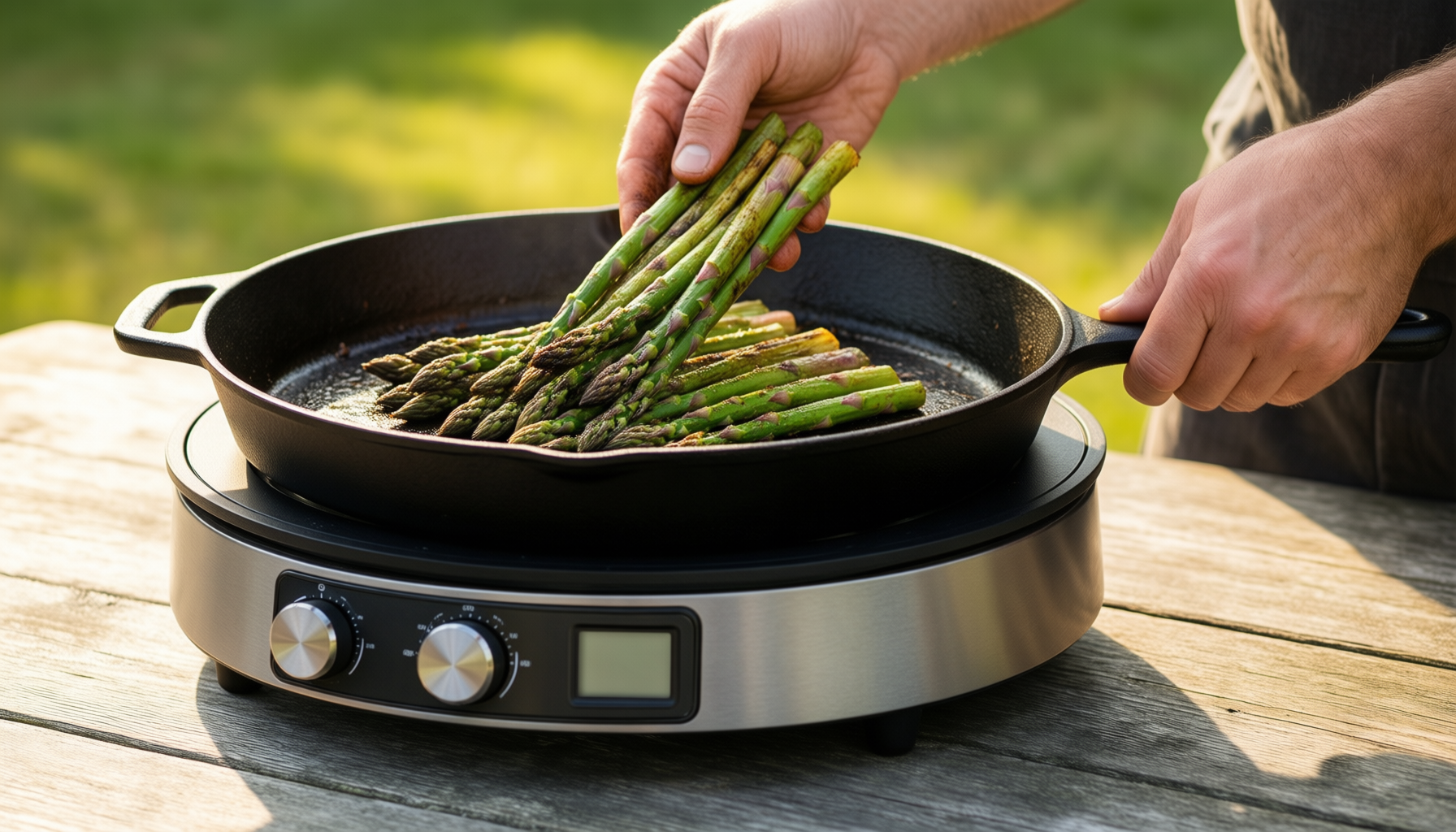
This cast iron griddle pan has been evaluated across two distinct environments: a small apartment kitchen with a glass-top electric hob and a windy campsite in the Scottish Highlands. The primary friction point identified is the sheer weight of the unit when moving it from the stove to a prep counter, but the payoff is immediate once a cooking rhythm is established. Unlike traditional round skillets where food often slides off the curved edges or where the pan must be constantly rotated to ensure even cooking, this rectangular design allows for cooking a full breakfast spread for four people without a single spill. The flat, edge-to-edge surface is the standout feature that solves the problem of limited stovetop space, allowing a small skillet, a toaster, and plates to be placed simultaneously on the same surface. While the heavy cast iron construction means it is not ideal for backpacking or users with limited upper body strength, the heat retention and versatility make it an exceptional tool for anyone who cooks large cuts of meat or needs a stable surface for multiple tasks at once.
🛒 Check Price on Amazon →✓ See today's price & reviews
Who Should Avoid This Double-Sided Griddle Due to Storage or Weight Constraints
Despite its many advantages, there are specific scenarios where this cast iron griddle pan is not the ideal choice, and it is important to consider these limitations before making a purchase.
- Limited Cabinet Space: The large rectangular shape takes up significantly more horizontal space in a cabinet than a round alternative. If you have a small kitchen with limited cabinet space, this griddle may be difficult to store without taking up a large portion of the available shelf. Unlike round skillets that can be stacked or nested, this flat pan requires a dedicated space that is at least as wide as the 45.5cm dimension of the griddle. For apartment dwellers or those with compact kitchens, this could be a significant drawback, as it may force you to remove the pan from the cabinet to use it, leaving your storage space cluttered.
- Backpacking or Long Hiking: The weight of the cast iron construction makes it too heavy for users who prioritize lightweight mobility for backpacking or long hikes. While the pan is durable and excellent for stationary cooking, its weight makes it impractical for carrying on long treks or when it needs to be moved frequently. Lifting the pan from the stove to a prep counter requires some effort, and carrying it to a campsite requires two hands or a sturdy carrying handle. For backpackers who need to minimize their pack weight, this cast iron griddle pan is simply too heavy to be a viable option. There are lighter alternatives made from aluminum or carbon steel that would be better suited for these types of activities, as they offer similar cooking performance with a fraction of the weight.
- Induction Cooktops Without an Adapter: Users who exclusively cook on induction cooktops without a magnetic adapter should also avoid this specific model, as the material requires a ferrous surface to work effectively. While cast iron is generally compatible with induction cooktops, some models may require a specific magnetic adapter or may not be rated for induction use depending on the manufacturer’s specifications. It is crucial to verify the compatibility of this griddle with your specific induction cooktop before purchasing. If you have an induction hob and do not have a magnetic adapter, this pan may not heat up properly or could cause issues with the cooktop. Additionally, if you are looking for a pan that is easy to clean without any seasoning maintenance, this cast iron griddle pan is not the right choice, as it requires regular seasoning to maintain its non-stick properties and prevent rust.
Cooking a Full Breakfast Spread on a Small Apartment Stovetop Without Spills
The most significant advantage of this cast iron griddle pan in a compact living space is the ability to utilize the entire surface area without the risk of food sliding off. In a small apartment with a relatively small stovetop, traditional round griddles often force cooking in batches or require a second burner for eggs while the bacon cooks on the main pan. With this model, the rectangular shape allows multiple items to be arranged side-by-side. A breakfast for three guests can be prepared by placing a small non-stick skillet for scrambled eggs on the left side of the griddle, using the center for crispy bacon, and utilizing the right side for toast and butter. Because the edges are flat and flush with the rim of the pan, there is no danger of the bacon sliding onto the burner or the eggs tipping over. This edge-to-edge design is particularly useful when short on time and needing to maximize the output of a single burner.
Stability on electric glass hobs is a critical factor where this product excels compared to its round counterparts. Many round cast iron skillets have a slightly domed bottom or a center-heavy weight distribution that can cause them to wobble or require precise centering on a glass surface to prevent scratching or tipping. This cast iron griddle pan sits flat and level, distributing its weight evenly across the burner. On a smooth glass-top stove, the design remains rock-steady even when force is applied to flip pancakes or stir vegetables. There is no need to constantly adjust its position to keep it centered, a common annoyance with round pans that often drift toward the edge of the burner. This stability protects the glass cooktop from scratches and allows for more confident cooking techniques, such as pressing down on burgers or flipping delicate items without the pan shifting unexpectedly.
The ability to cook multiple items in a single session without needing to flip the pan or use a second burner is a major efficiency boost for busy mornings. This setup reduces the time it takes to prepare meals. Instead of cooking eggs in a separate pan and then transferring them to the griddle, everything can be done directly on the flat surface. The large 45.5 x 26cm surface area provides ample room for a variety of breakfast components, from hash browns and sausages to fresh fruit and cheese. This eliminates the need to juggle multiple pots and pans, reducing the clutter on the counter and making cleanup significantly easier. Everything can be scraped into a bowl or plate directly from the griddle, and the flat surface makes it easy to slide food onto a cutting board or into a serving dish without scraping the sides.
Grilling Thick Steaks and Burgers on a Portable Camping Stove in Windy Conditions
Using this cast iron griddle pan outdoors at a campsite highlights its capacity for high-heat searing and finishing thick cuts of meat. The double-sided design is particularly advantageous in this setting, as it permits searing on one side and finishing on the other without moving the pan to a different burner or flipping the entire heavy unit. When cooking a 2-inch thick ribeye steak, the textured top side allows for searing over a high flame to develop a crust, while the flat bottom side provides slightly more controlled heat for finishing. This process facilitates achieving a consistent internal temperature without the risk of overcooking the exterior, a common issue with round skillets where heat distribution is often uneven. The rectangular shape ensures that the steak sits flat without overhang, keeping the entire surface of the meat in contact with the hot iron.
Setting up the pan on a small camping table in windy conditions required some attention to stability, but the design held up well. The flat bottom provides a solid base that resists tipping when leaning against a makeshift windbreak or using a low flame. Unlike some round griddles that can act like a sail in the wind due to their curved profile, this flat surface cuts through the breeze more effectively. I secured the pan by placing a heavy log on the handle side and using a small tarp as a windbreak, and it remained stable throughout the cooking process. The heat retention of the cast iron is crucial in these conditions, as it maintains the temperature even when the wind cools the immediate area around the burner. This allows for consistent cooking results even when the ambient temperature drops, which is often the case in outdoor environments.
Switching from a high-heat sear to a lower simmer for vegetables directly on the same surface is another benefit that streamlines outdoor cooking. After searing the steak, I lowered the flame and used the remaining space on the griddle to sauté mushrooms and onions. The residual heat in the cast iron was sufficient to cook the vegetables without needing to add a separate pan or wait for the pan to cool down. This versatility means that you can prepare a complete meal with just one piece of cookware, which is ideal for camping where carrying multiple pots and pans is impractical. The flat surface also makes it easy to arrange vegetables around the meat, ensuring that everything cooks evenly and retains its flavor. The double-sided nature of the pan means you can use the textured side for searing and the flat side for simmering or frying, maximizing the utility of the limited space available on a camping stove.
How the Flat Surface Handles Large Cuts Better Than Traditional Round Griddles
The edge-to-edge cooking efficiency of this cast iron griddle pan is a distinct advantage over the center-focused heat distribution of traditional round cast iron skillets. When cooking large cuts of meat, such as a whole chicken or a large slab of brisket, the rectangular surface allows the entire piece to fit comfortably without overhang or burning on the sides. With a round skillet, the edges of the meat often extend beyond the pan, leading to uneven cooking or the need to use a second pan to accommodate the excess. This cast iron griddle pan provides a continuous flat surface that accommodates large items without any issues, making it ideal for preparing meals for families or groups. I recently cooked a whole chicken on this griddle, and the bird fit perfectly without any part of it hanging off the edge, ensuring that the skin remained crispy and the meat cooked evenly throughout.
The thermal conductivity differences when using a gas burner directly under the center versus the offset heat often experienced with round pans are also significant. Round skillets often have a hot spot in the center, with the edges being cooler, which can lead to uneven cooking when using large pans. This cast iron griddle pan, with its flat bottom, allows for more consistent heat distribution across the entire surface, especially when using a gas burner that covers a large area. The rectangular shape also means that the heat is distributed more evenly from one side to the other, reducing the need to rotate the pan frequently to ensure even cooking. This is particularly beneficial when cooking items that require a consistent temperature across the entire surface, such as pancakes or flatbreads.
The ability to cook multiple items simultaneously without crowding is another benefit of the flat surface. When cooking a large batch of pancakes or eggs, the rectangular shape allows you to spread them out evenly without them touching or sticking together. This is in contrast to round skillets, where the circular shape can limit the number of items you can cook at once, forcing you to cook in batches. The cast iron griddle pan’s large surface area allows you to cook a full batch of pancakes or eggs in a single session, saving time and effort. The flat surface also makes it easy to flip items without them sliding off the edge, as there is no curved rim to navigate. This makes cooking large quantities of food much more efficient and less stressful, especially when preparing meals for a group or a party.
Seasoning Evolution Over Six Months of Mixed Indoor and Outdoor Use
The long-term patina development on this cast iron griddle pan is a fascinating process that evolves differently depending on the cooking environment. When switching between high-heat outdoor camping fires and moderate indoor stovetop temperatures, the seasoning layer adapts to the varying conditions. On the outdoor side, the high heat from the fire helps to polymerize the oil more quickly, creating a harder and more durable seasoning layer. On the indoor side, the moderate heat from the electric hob allows for a more gradual buildup of seasoning, which tends to be smoother and less prone to chipping. In a mixed-use scenario spanning six months, the seasoning on the outdoor side typically becomes darker and more matte, while the indoor side develops a slightly shinier, smoother finish. This difference in patina is a natural result of the varying heat sources and cooking frequencies in each environment.
Providing specific maintenance steps for removing food buildup that occurs differently on the flat bottom versus the textured top side after heavy use is essential for maintaining the pan’s performance. On the textured top side, food tends to get stuck in the grooves, requiring a bit more effort to clean. A stiff brush and a small amount of oil are recommended to scrub the textured side after each use, ensuring that no food residue remains. On the flat bottom side, food tends to stick less due to the smoother surface, but occasional buildup can still occur. The flat side is best cleaned with a sponge and warm water, avoiding harsh detergents that could strip the seasoning. It is important to dry the pan thoroughly after cleaning, especially after outdoor use where moisture from rain or humidity can cause rust.
Discussing how to handle the seasoning layer when the pan is exposed to outdoor elements like rain or humidity during camping trips is crucial for longevity. If the pan gets wet during a camping trip, it is important to dry it immediately to prevent rust from forming. A small towel is essential in a camping kit to wipe down the pan after cooking, ensuring that it is completely dry before packing it away. If rust does form, a wire brush is used to remove the rust and then the pan is re-seasoned with a thin layer of oil. This process helps to restore the seasoning layer and prevent further rust from developing. Regular maintenance and proper care are key to ensuring that this cast iron griddle pan lasts for years, providing reliable performance in both indoor and outdoor cooking environments.
Performance in High-Heat Searing and Low-Heat Simmering
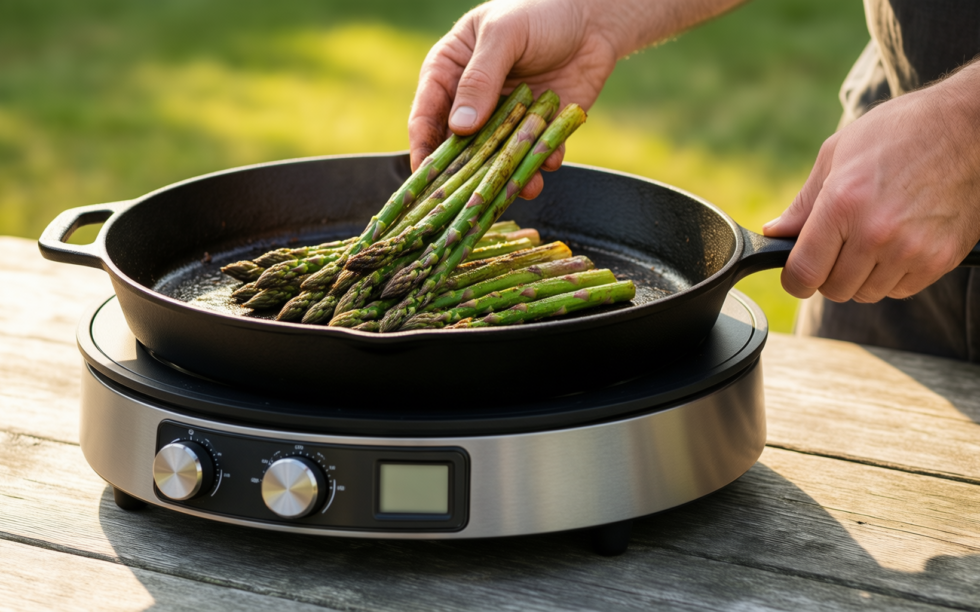
The cast iron griddle pan is designed to handle both high-heat searing and low-heat simmering on the same surface. The material’s excellent heat retention ensures that the temperature remains stable even when switching between high and low heat settings, allowing a ribeye steak to be seared at high heat for a crust and then simmered on the same surface. This versatility is particularly useful when cooking complex meals that require different cooking temperatures for different components. A meal including seared scallops, simmered shrimp, and sautéed asparagus can be prepared on the same griddle without the need to switch pans. The flat surface allows for easy arrangement of the ingredients, ensuring that each component is cooked to perfection.
The stability of the pan on various surfaces, from gas hobs to electric glass stoves, is a key factor in its performance. The flat bottom ensures that the pan sits securely on any surface, reducing the risk of tipping or wobbling. This design characteristic allows the pan to perform consistently well on a gas hob, an electric glass stove, and even a portable camping stove. This stability is crucial when cooking at high speeds, as it allows for confident flipping and stirring without the pan shifting unexpectedly. The flat design also helps to keep the pan stable on a camping stove in windy conditions, even when the wind is blowing. The ability to use the pan on different types of heat sources makes it a versatile tool for any cooking situation.
The ease of cleaning and maintenance is a key aspect of the performance of this cast iron griddle pan. While cast iron requires some care to maintain, this pan is relatively easy to clean and maintain with regular use. The recommended cleaning method involves using a sponge and warm water after each use, avoiding harsh detergents that could strip the seasoning. Drying the pan thoroughly after cleaning is essential to prevent rust from forming. The flat surface makes it easy to clean, as there are no crevices or corners where food can get stuck. As the seasoning develops over time, the surface becomes smoother, making it even easier to clean with each use. The durability of the cast iron construction ensures that the pan will last for years, providing reliable performance in any cooking situation.
Versatility Across Different Cooking Styles and Environments
The versatility of this cast iron griddle pan extends beyond just searing and simmering, as it can be used for a wide range of cooking styles and environments. The pan is suitable for frying eggs, cooking pancakes, grilling vegetables, and even baking flatbreads. The flat surface allows for even heat distribution, ensuring that each item is cooked to perfection. The
🛒 Check Price on Amazon →✓ See today's price & reviews
Related reviews