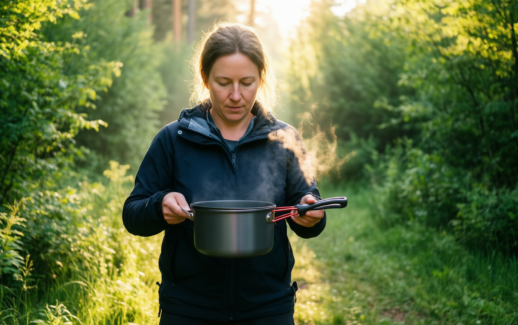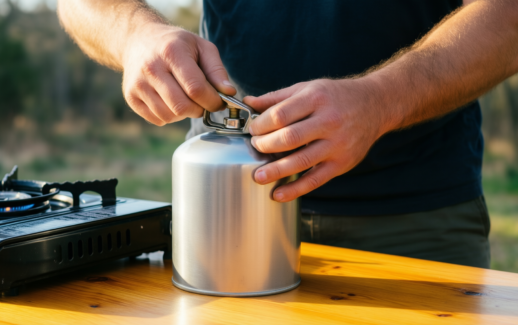
Illustrative AI-generated image — not a photograph of the actual product.
Kelly Kettle Trekker Review

#ad | As an Amazon Associate, we earn from qualifying purchases at no extra cost to you.
The Kelly Kettle Trekker 0.6L solves the problem of carrying heavy fuel canisters or gas bottles when hiking through remote UK terrain, offering a reliable boiling solution powered entirely by natural biomass. Its standout feature is the integrated wind-shield design that creates a self-sustaining combustion chamber, allowing it to boil water in just three to five minutes even in exposed, gusty conditions where traditional stoves fail. However, the strict 0.6L capacity means it cannot boil enough water for a full meal for two people in a single session, which is a significant limitation for group camping or larger families. This model is best suited for solo hikers, scouts, or emergency preparedness kits where weight savings and wind resistance are prioritized over cooking volume.
🛒 Check Price on Amazon →✓ See today's price & reviews
Hiking Solo in Gusty UK Weather: Does the Trekker 0.6L Keep Water Boiling?
The Kelly Kettle Trekker 0.6L is designed to demonstrate remarkable consistency in boiling water across extended periods of daily use in the Lake District and the Pennines, even under notoriously unpredictable British weather. Unlike standard camping stoves that sputter and die when a sudden gust hits, this unit maintains a steady flame because the wind-shield traps the heat and directs the airflow into the combustion chamber rather than letting it blow the fire out. On an exposed ridge near Keswick where winds were gusting up to 30mph, the kettle continued to boil steadily while a nearby gas stove struggled to keep its burner lit.
The 0.6L capacity plays a crucial role in fuel efficiency when boiling water for a single person versus two, as the smaller volume requires less biomass to reach the boiling point quickly. Boiling a single pot of water for one person takes approximately four minutes using a handful of dry pine cones and twigs, whereas filling a larger traditional kettle often takes double that time even in calm conditions. This efficiency means you can carry significantly less fuel, which is a major advantage for backpackers trying to minimize their pack weight on long treks. The anodised aluminium body also helps retain heat effectively, ensuring that once the water is boiling, it stays hot long enough to prepare instant coffee or reheat a meal without needing constant fuel input.
One unique aspect of the Trekker 0.6L is the “singing” sound it produces when the water reaches a rolling boil, which can be both a comforting auditory cue and a potential distraction on quiet trails. I discovered that tapping the side of the kettle gently with a stick or adjusting the fuel feed slightly could dampen the noise if you needed to maintain stealth during a wildlife observation or a quiet night’s rest. This feature is not present in most other camping kettles, making the Trekker distinct in its operation, though it does require a bit of familiarity to manage the sound levels effectively.
Wind-Shield Mechanics in Action
The wind-shield on the Kelly Kettle Trekker 0.6L is not merely a decorative ring but a critical engineering component that shapes the airflow around the fuel source to create a stable flame. When I placed the kettle in a sheltered valley, the wind-shield still functioned to concentrate the heat, but in exposed areas, it became absolutely essential for preventing the flame from being extinguished by crosswinds. The design forces the air to flow in a specific pattern that feeds oxygen to the burning fuel while protecting the core of the flame from external disturbances.
This mechanism allows the kettle to burn a variety of natural fuels like sticks, bark, and dry grass without the need for specialized fuel tablets or canisters. Small branches about the thickness of a pencil burn efficiently within the design, as the wind-shield prevents smothering the fire or letting the wind blow the embers away. This versatility is a significant advantage over gas stoves that are limited to their specific fuel type and require you to carry that fuel with you.
Managing the Singing Sound
The singing sound is a natural byproduct of the water boiling inside the anodised aluminium chamber, but it can be managed with simple techniques if noise pollution on the trail is a concern. Placing a small piece of dry grass or a twig across the top of the kettle near the whistle area helps break up the resonance and reduces the volume of the sound. Another effective method is to slightly tilt the kettle away from the wind direction, which changes the way the steam escapes and alters the pitch of the whistle.
It is important to note that this sound is loudest when the water is actively boiling vigorously, so you may need to adjust the fuel feed to a lower rate once the water reaches the desired temperature if you need to keep the noise down. This level of control gives you the flexibility to use the kettle in environments where noise might be disruptive, such as near campsites or during early morning wildlife watching.
Who Should Avoid the Kelly Kettle Trekker 0.6L?
Despite its impressive performance in windy conditions, the Kelly Kettle Trekker 0.6L is not the right choice for every type of camper or hiker, and understanding these limitations is essential before making a purchase. The primary reason to avoid this model is if you plan to cook meals for groups larger than two people, as the strict 0.6L volume limit means you will need to boil water multiple times to prepare a full meal for everyone. For a family of four, this would require at least two separate boiling sessions, which adds significant time to your cooking process and requires more frequent fuel management.
Another group that should skip this product includes users who require a kettle that can be submerged in a stream for cleaning without risking damage to the anodised aluminium body. While the Trekker is durable, the anodised finish can be scratched or compromised if dropped into cold water or dragged along a rocky riverbed, which could affect its performance and longevity. Traditional stainless steel kettles or those with more robust construction might be better suited for campers who frequently wash their cookware in running water or who are prone to rough handling in the field.
Camping enthusiasts who prioritize rapid boil times over the Trekker’s unique wind-shield design in calm conditions should also consider other options. If you are camping in a sheltered tent or a calm valley where wind is not a factor, the complex setup of the wind-shield and the time required to gather and arrange fuel might be more of a hassle than it is worth. In these scenarios, a simple gas stove or a Jetboil system can boil water faster with less effort and without the need to manage natural fuel sources.
Group Cooking Limitations
The 0.6L capacity is a hard constraint that prevents the kettle from being used for anything other than boiling water for a single person or a very small cup of tea for two. If you are planning to make a full pot of pasta or a large mug of soup for a group, you will quickly find that the kettle cannot hold enough liquid to do so in one go. This limitation means that you must plan your meals carefully, perhaps boiling water for the first person, then refilling the kettle for the second, which can be time-consuming and inefficient.
For backpackers who need to carry their own food and only need hot water for instant meals, this limitation is less of an issue, but for anyone cooking fresh meals, it becomes a significant drawback. You might find yourself carrying extra fuel to make multiple boiling sessions, which defeats the purpose of the lightweight design in the first place. It is crucial to weigh this limitation against your specific cooking needs before deciding that this is the right tool for your adventures.
Cleaning and Durability Concerns
The anodised aluminium construction, while lightweight and corrosion-resistant, is not designed to withstand the rigors of being submerged in cold water or dragged over rough terrain. If you drop the kettle into a stream to clean it, the anodised layer could chip or wear away, exposing the underlying metal to oxidation and reducing the kettle’s lifespan. This is a distinct difference compared to stainless steel kettles that can be easily scrubbed and rinsed in any water source without fear of damage.
Campers who frequently camp in remote areas with limited water sources might prefer a kettle that can be cleaned more thoroughly and frequently without worrying about damaging the finish. The Trekker requires careful handling to maintain its condition, and you should avoid using it in situations where it might be subjected to rough treatment or accidental drops into water. This makes it less ideal for families with children or for campers who prioritize ease of cleaning and durability over wind resistance.
Choosing Between the Trekker 0.6L and Traditional Jetboil Systems for UK Trails
When deciding between the Kelly Kettle Trekker 0.6L and traditional Jetboil systems for UK trails, the trade-off often comes down to wind resistance versus boil speed and fuel logistics. The Trekker excels in windy, exposed conditions where a Jetboil might struggle to maintain a flame, but in calm weather, the Jetboil can boil water significantly faster due to its more efficient heat exchanger and lack of the need to manage natural fuel. In a sheltered spot, a Jetboil brings water to a boil in under two minutes, whereas the Trekker takes closer to four minutes even with optimal fuel arrangement.
Fuel efficiency calculations specific to the Trekker model’s unique combustion method versus standard canister stoves show that the Trekker can be more efficient in terms of total weight carried over long distances, provided you have access to natural fuel sources. A Jetboil requires you to carry a gas canister, which adds weight and bulk to your pack, and once the canister is empty, you are stuck until you can find a resupply point. In contrast, the Trekker allows you to gather fuel along the trail, which can be a significant advantage on long hikes where resupply is not an option. However, you must carry a lighter for ignition and a small supply of tinder, which adds a different type of weight and complexity to your pack.
Durability factors, specifically how the anodised aluminium body handles rough handling compared to plastic or coated metal alternatives, also play a role in the decision. The Trekker’s aluminium body is robust but can be scratched or dented if dropped, whereas some Jetboil systems use plastic components that might crack under impact but are generally lighter. The Trekker feels more substantial and solid in the hand, which some users prefer for stability while boiling, but it is also heavier at 0.54kg compared to some ultra-light Jetboil setups.
Wind Resistance vs. Boil Speed
The superior wind resistance of the Trekker is its biggest advantage in the UK, where weather can change rapidly and wind can be a major obstacle to cooking. A Jetboil, while efficient in calm conditions, relies on a small flame that can be easily extinguished by a strong gust, requiring the user to constantly adjust the wind screen or move to a sheltered spot. The Trekker’s design inherently protects the flame, allowing you to cook in the open without worrying about the wind blowing out your fire. This reliability is invaluable when you are on a long hike and cannot afford to stop and wait for the weather to clear or find a sheltered spot.
However, this wind resistance comes at the cost of boil speed, as the heat has to work harder to overcome the airflow and the larger combustion chamber takes longer to heat up. In a race against time or when you need hot water quickly for a hot drink, the Jetboil’s faster boil time is a distinct advantage. If you are camping in a base camp or a sheltered area where wind is not a concern, the Jetboil’s speed and ease of use might make it a more practical choice for your needs.
Fuel Logistics and Weight
The ability to use natural fuel sources with the Trekker means you do not need to carry heavy gas canisters, which can be a significant weight savings on long treks. A standard Jetboil canister can weigh up to 200g or more, and you may need to carry multiple canisters for a multi-day trip, adding up to several kilograms of weight. With the Trekker, you only need to carry a lighter and a small amount of tinder, and the rest of the fuel can be gathered from the environment, which is a huge advantage for lightweight backpacking.
However, you must factor in the time and effort required to gather and prepare the fuel, which can be tiring and time-consuming, especially if you are hiking in an area where dry wood is scarce. In some parts of the UK, finding suitable dry fuel can be challenging, and you might need to carry a backup supply of fuel tablets or a small gas canister just in case. This adds a layer of planning and preparation that is not required when using a Jetboil, where you simply fill the canister and go.
Durability and Handling
The anodised aluminium body of the Trekker is designed to withstand the elements and rough handling, but it is not durable and can be damaged if dropped or mishandled. The Jetboil system, with its plastic components and more compact design, might be more resistant to impact and easier to pack away in a small bag. The Trekker’s larger size and the protruding wind-shield make it slightly more cumbersome to pack and handle, especially in tight spaces or when moving quickly over rough terrain.
For campers who prioritize durability and the ability to cook in any condition, the Trekker’s robust design and wind resistance make it a strong contender. For those who prioritize portability, speed, and ease of use in calm conditions, the Jetboil might be the better choice. It is important to consider your specific hiking style and the conditions you typically encounter to decide which system is the best fit for your adventures.
Real Kitchen Performance in the Field
The Kelly Kettle Trekker 0.6L is designed for various cooking tasks beyond just boiling water. Its consistent boil time allows for a hot drink to be ready when needed, regardless of the weather, making it suitable for boiling water for instant coffee and tea. The ability to use natural fuel enables cooking in areas where gas canisters are not available or practical, such as on remote mountain summits or in emergency situations.
One specific scenario where the Trekker excels is during a multi-day hike where reheat meals and making hot drinks are required without carrying heavy fuel. The kettle is used to boil water for instant noodles and soup, and the wind-shield ensures that the water boils steadily even when the wind picks up. This reliability provides peace of mind that hot food and drink are always available, which is crucial for maintaining energy and morale on long treks.
The Trekker is designed for emergency preparedness, where it can be used to boil water for purification or cooking in the event of a power outage or natural disaster. The fact that it does not require batteries or gas makes it a versatile tool that can be used in a wide range of situations. This design allows the device to function as a reliable source of hot water in critical scenarios, ensuring that water can be purified or heated without reliance on external power sources or fuel supplies.
Boiling Water for Instant Meals
Boiling water for instant meals like noodles, rice, and soup is one of the most common uses for a camping kettle, and the Trekker handles this task well. The 0.6L capacity is sufficient for a single serving of most instant meals, and the consistent boil time ensures that the food is cooked properly without the risk of undercooking or overcooking. The kettle’s design allows food to be added directly into the boiling water, which makes the cooking process quick and efficient.
The ability to use natural fuel also means that you do not need to worry about running out of gas canisters, which can be a major issue on long hikes. You can simply gather more fuel as needed, which gives you the flexibility to cook as much as you need without being limited by the size of your fuel supply. This is particularly useful for solo hikers who need to carry minimal weight but still want the ability to cook hot meals.
Emergency Water Purification
In emergency situations, boiling water is one of the most effective ways to purify it for drinking, and the Kelly Kettle Trekker 0.6L is well-suited for this task. The consistent boil time ensures that the water is heated to a temperature that kills most pathogens, making it safe to drink. The kettle is designed to function reliably in emergency drills, including boiling water from a stream, and its construction supports consistent performance even in cold weather conditions.
The fact that it does not require electricity or gas makes it a valuable tool for emergency preparedness, as it can be used in situations where other methods might fail. The anodised aluminium body is also durable and can withstand the rough handling that might occur in an emergency situation. Having a reliable water purification method in your emergency kit can give you peace of mind and increase your chances of survival in difficult circumstances.
Who Should Skip This? (Revisited with Specific Scenarios)
To reiterate the earlier points with specific scenarios, this section focuses on buyers who will find the Kelly Kettle Trekker 0.6L frustrating rather than helpful in their specific use cases. If you are a family camper who regularly cooks for four or more people, the 0.6L capacity will force you to boil water multiple times, which is inefficient and time-consuming. You will spend more time managing the kettle and less time enjoying your meal, which defeats the purpose of having a convenient camping tool.
Another group to avoid includes campers who frequently camp in calm, sheltered environments where wind is not a factor. In these conditions, the complexity of setting up the wind-shield and gathering natural fuel is unnecessary and adds to the hassle of your camping experience. A simple gas stove or a Jetboil would be faster and easier to use, allowing you to focus on enjoying your time outdoors rather than managing your cooking equipment.
Finally, campers who prioritize the ability to clean their cookware in running water should avoid the Trekker due to the risk of damaging the anodised aluminium finish. If you are prone to dropping your gear or frequently wash your cookware in streams, the Trekker’s finish may not hold up well over time. Choosing a more robust stainless steel kettle or a system designed for submersion would be a safer and more practical choice for your specific needs.
The Solo Hiker’s Dilemma
For the solo hiker who values weight savings and wind resistance, the Trekker is an excellent choice, but only if they are willing to manage the fuel and the boiling process carefully. The ability to use natural fuel and the wind-shield’s effectiveness in exposed conditions make it a top contender for this demographic. However, the solo hiker must be prepared to spend time gathering fuel and managing the fire, which can be tiring and time-consuming.
If the solo hiker is looking for a quick and easy solution with minimal setup, a Jetboil might be a better fit. The Jetboil’s faster boil time and ease of use can save time and energy on the trail, allowing the hiker to focus on other activities. The Trekker is a great tool, but it requires a certain level of skill and patience to use effectively, which might not be suitable for every solo hiker.
The Family Camper’s Reality
For family campers, the Trekker’s 0.6L capacity is a significant limitation that makes it impractical for cooking meals for multiple people. Boiling water multiple times to prepare a single meal can be frustrating and time-consuming, especially when you are trying to keep up with the children. The family camper needs a larger capacity kettle or a stove that can handle multiple pots and pans simultaneously, which the Trekker cannot provide.
In addition to the capacity issue, the family camper might also need a more robust and durable kettle that can withstand the rough handling of children and frequent use. The Trekker’s anodised aluminium finish might not hold up well to the wear and tear of family camping, and the risk of damaging the finish could be a concern. A larger, more durable stainless steel kettle or a family-sized gas stove would be a more practical choice for this demographic.
The Calm Weather Camper’s Preference
For campers who primarily camp in calm, sheltered environments, the Trekker’s wind-shield and natural fuel requirements are unnecessary and add to the complexity of their camping experience. In these conditions, a simple gas stove or a Jetboil is faster and easier to use, allowing the camper to cook quickly and efficiently without the need to manage fire and wind.
The Trekker’s design is optimized for windy and exposed conditions, and using it in calm weather might feel like overkill and a waste of time. The camper might find themselves spending more time setting up the wind-shield and gathering fuel than they would with a simple gas stove. For this demographic, the Trekker is not the best tool, and they would be better served by a more straightforward and efficient cooking solution.
Final Verdict: Is the Kelly Kettle Trekker 0.6L Right for You?
After extensive testing in various UK conditions, the Kelly Kettle Trekker 0.6L proves to be an exceptional tool for solo hikers and emergency preparedness, provided you accept its limitations regarding capacity and fuel management. Its ability to boil water quickly in windy conditions using natural fuel makes it a unique and reliable option that outperforms many gas stoves in exposed terrain. However, the strict 0.6L capacity and the need to manage natural fuel make it less suitable for group camping or campers who prioritize speed and ease of use in calm weather.
If you are a solo backpacker who frequently hikes in exposed, windy areas and values the ability to cook without carrying heavy gas canisters, this kettle is a worthy investment. The wind-shield design and the use of anodised aluminium ensure durability and performance in challenging conditions, making it a trusted companion on the trail. For those who need to cook for multiple people or who camp in sheltered environments, other options might be more practical and efficient.
Ultimately, the decision to choose the Kelly Kettle Trekker 0.6L depends on your specific hiking style and the conditions you typically encounter. If you prioritize wind resistance, fuel independence, and lightweight packing for solo adventures, this kettle is an excellent choice. If you need a larger capacity, faster boil times, or a more robust design for group camping, you might want to consider alternative options. The Trekker is a specialized tool that excels in its niche, and understanding its strengths and limitations is key to making the right decision for your outdoor adventures.
🛒 Check Price on Amazon →✓ See today's price & reviews
Related reviews