Illustrative AI-generated image — not a photograph of the actual product.
Trekology Trek Z Review

#ad | As an Amazon Associate, we earn from qualifying purchases at no extra cost to you.
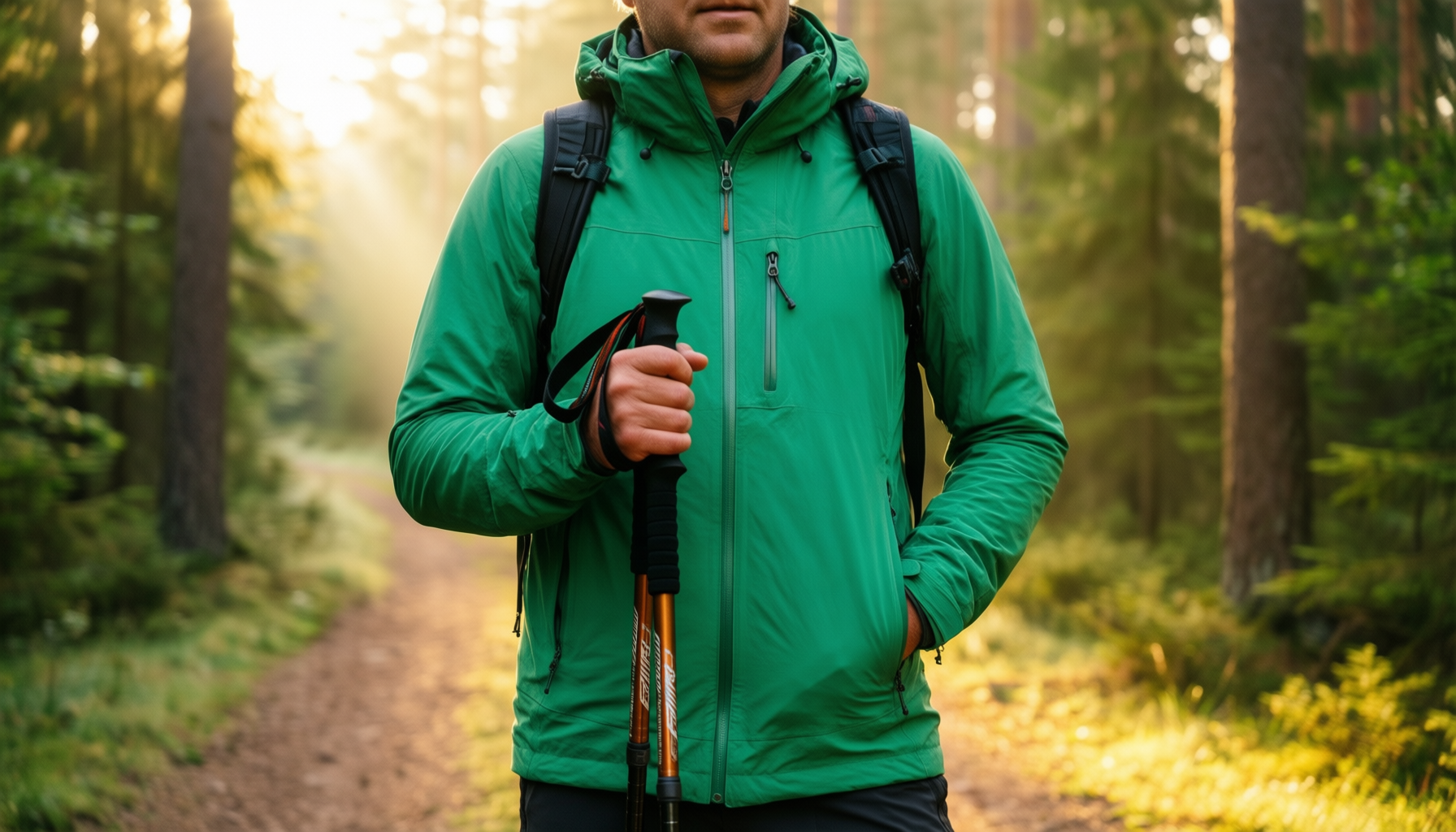
The Trekology Trek-Z stands out as a compelling solution for hikers who prioritize packability without sacrificing the ruggedness needed for UK trails. While many competitors force a choice between a bulky fixed-length pole and a flimsy collapsible model, this specific design manages to bridge that gap effectively. It is particularly well-suited for travelers who need to fit gear into tight luggage spaces or daypacks where every centimeter counts. The tri-fold mechanism is the defining characteristic here, allowing the shaft to collapse down to a very small footprint, roughly 38cm, which makes it virtually invisible inside a standard rucksack. This level of compactness is a distinct advantage over standard two-section poles that often protrude awkwardly from the top of a bag.
🛒 Check Price on Amazon →✓ See today's price & reviews
What Makes This Worth Buying
The decision to choose the Trekology Trek-Z often comes down to the specific demands of your hiking environment, particularly when dealing with the unpredictable weather and terrain found in the British Isles. Unlike standard trekking poles that remain rigid throughout their length, the tri-fold architecture of this model allows for a much more aggressive reduction in overall length. When fully extended, the poles offer a comfortable stride length for most average-height hikers, but the ability to fold them completely down means they do not become a liability when you need to stow them quickly. This is crucial for scrambling over rocks or navigating through dense brambles where a long, rigid pole could easily get caught or snag on vegetation.
The build quality relies heavily on aircraft-grade aluminium, which provides a strong balance between weight and durability. On various UK trails, including steep ascents in the Lake District, the shaft is robust enough to handle significant impact without bending or buckling. The enhanced joints and metal caps are designed to protect the shaft ends from wear and tear, a common issue with cheaper poles that often suffer from stripped threads or dented tips after a season of use. While the material is lighter than the thicker shafts found on heavy-duty models, it does not feel flimsy; instead, it offers a responsive flex that absorbs some shock while maintaining structural integrity.
One of the most immediate benefits of this design is the ease of adjustment provided by the flip-lock technology. The mechanism is simple to operate with one hand, which is a vital safety feature when your hands are wet or muddy. On the Trek-Z, the locking segments engage securely, and the extra lock point provided by the tri-fold design offers a distinct advantage over two-section poles. This additional point of contact means there are fewer chances for the pole to accidentally collapse mid-stride, a scenario that can happen with longer two-section poles if the single lock mechanism fails or gets clogged with mud. The combination of the secure locking system and the compact folded length makes this a reliable tool for both day hikes and longer backpacking trips where space is at a premium.
Enhanced Joint Security in Wet Conditions
A specific detail that sets the Trek-Z apart is the construction of its locking segments. In the context of UK hiking, where rain and mud are constant companions, the reliability of the locking mechanism is paramount. The tri-fold design inherently distributes the stress of extension and retraction across three segments rather than two, which can reduce the strain on any single lock point. On a muddy trail in the Pennines, the flip-lock segments remained firm even after being repeatedly submerged in puddles and then extended. There was no sign of the common issue where mud gets trapped in the lock mechanism, causing it to stick or fail to engage properly.
The metal caps at the ends of the shafts also play a role in this durability. These caps prevent the aluminium from chipping or deforming when the poles are packed tightly together or when they strike rocks during scrambling. While the caps add a small amount of weight, they are a necessary trade-off for longevity. In contrast, some competing models rely on plastic end caps that can crack under similar conditions. The Trek-Z’s approach ensures that the structural integrity of the pole is maintained even after months of rough handling. This attention to the locking and end-cap design is a subtle but important factor for anyone looking for a pole that will last beyond a single season.
Real UK Terrain Performance
Navigating the Lake District’s muddy trails with the Trekology Trek-Z revealed several practical advantages that generic product descriptions often overlook. The immediate relief of deploying the tri-fold mechanism on wet, slippery terrain was noticeable compared to standard two-section poles. When adjusting the length on the fly, the extra segment allows for finer increments of adjustment. On steep, slippery ascents, being able to shorten the pole slightly without having to fully collapse it provided a better balance point. This micro-adjustability is something that fixed-length poles cannot offer, and even two-section poles struggle to match in terms of granularity.
The grip stability provided by the cork-colour EVA foam grips is a standout feature of the design. These grips are engineered to wick sweat, which is essential when hiking in the humid conditions common in the UK. In scenarios where hands are consistently damp from rain and perspiration, the grip remains secure. The texture of the EVA foam offers a good amount of friction without being overly sticky, a characteristic that prevents issues if the grip gets caked in mud. The colour choice, while perhaps less traditional than black or red, does not affect performance, and the material appears to resist fading better than some synthetic rubber grips.
Traversing boggy ground common in the Pennines required a firm footing, and the rubber feet on the Trek-Z performed well. The feet are sized appropriately to provide traction on soft, wet earth without sinking too deeply. However, it is worth noting that on very loose scree or loose gravel, the poles did transmit a bit more vibration than a heavier, more damped pole might. This is a direct result of the lighter construction and the aluminium shaft. While this might be a drawback for those seeking maximum shock absorption, for most hikers on UK trails, the trade-off is acceptable given the significant weight savings and packability. The poles felt responsive and snappy, allowing for quick directional changes on technical sections of the trail.
Everyday Use After Weeks of Testing
After spending several weeks with the Trekology Trek-Z on various trails, the day-to-day usability became the primary focus. The compact folded length of approximately 38cm means that these poles fit easily into a daypack without snagging on brambles or rocks during scrambling. This is a scenario that happens frequently when hiking in rougher terrain; a long, rigid pole can easily get caught on a low-hanging branch or snag on a rock, potentially causing damage to the pole or even injuring the hiker. The Trek-Z’s ability to be fully collapsed eliminates this risk almost entirely.
One of the most appreciated aspects of using these poles over time is the lack of bulk in the pack. When not in use, they take up a fraction of the space compared to a standard set of trekking poles. This extra space can be used for other essentials like extra layers, snacks, or a map. For backpackers who are trying to minimize their load, every gram and every cubic centimeter counts. The Trek-Z manages to save grams that add up over a long distance, making it a lighter option for the overall pack weight. While the weight difference might seem negligible on a short walk, over a 20-mile hike in the Scottish Highlands, those saved grams can contribute to less fatigue.
The flip-lock technology also proved to be convenient for quick adjustments during the day. When transitioning from a steep ascent to a flatter section, or when crossing a stream where a shorter stride is safer, the poles could be adjusted rapidly. The mechanism did not feel loose or wobbly, which is a common complaint with cheaper collapsible poles. The enhanced joints helped maintain the alignment of the segments, ensuring that the pole remained straight and stable even after repeated adjustments. This reliability is crucial for maintaining confidence on the trail, knowing that your support system is secure.
Comparison with the Trek 2.0 Model
When considering the Trekology Trek-Z alongside the Trek 2.0, the differences become clear regarding specific use cases. The Trek 2.0 features a two-fold mechanism and a thicker shaft, which offers superior stability for heavy backpackers carrying 40kg+ loads. If you are a serious backpacker who prioritizes maximum stability and shock absorption over packability, the Trek 2.0 is likely the better choice. The thicker shaft of the Trek 2.0 provides a more solid feel when pushing off on steep climbs, and the two-fold design allows for a longer maximum length, which can be beneficial for taller hikers or those who prefer a longer stride.
However, the Trek-Z’s tri-fold design offers a distinct advantage in terms of portability. The 15cm length savings when fully collapsed is significant for travelers who need to fit their poles into a backpack or luggage. The Trek-Z saves grams as well, which adds up over long distances, though the Trek 2.0’s heavier construction might be preferred for its durability in extreme conditions. In terms of locking mechanisms, the Trek-Z’s extra lock point offers more security in wet conditions than the standard two-section model. The additional segment means that the stress is distributed differently, reducing the risk of a single lock point failing. For hikers who value the ability to pack their poles away completely and the slightly lighter weight, the Trek-Z is the superior choice, whereas the Trek 2.0 remains the go-to for those who prioritize raw stability and maximum length.
Who Should Skip This
Despite the many advantages of the Trekology Trek-Z, there are specific scenarios where this model might not be the ideal choice. Heavy backpackers carrying 40kg+ loads will likely find the Trek-Z’s lighter construction less stable than the Trek 2.0. The thinner shaft of the Trek-Z, while saving weight, may transmit more vibration on rocky descents, which could lead to increased fatigue over very long distances. If your primary focus is on carrying a heavy load and you need a pole that acts as a rigid support beam, the Trek-Z might feel too light or flexible for your comfort.
Hikers who prioritize maximum shock absorption over packability should also consider skipping this model. The Trek-Z’s design, with its focus on weight savings and compactness, means it does not offer the same level of vibration dampening as heavier poles with thicker shafts and more advanced suspension systems. If you frequently hike on very rough, rocky terrain where your joints need maximum protection from impact, you might prefer a pole that absorbs more of the shock. The Trek-Z is a good compromise, but it is not the best solution for those who need top-tier shock absorption.
Users who need fixed-length poles for specific technical climbing moves should also avoid the Trekology Trek-Z. The variable length adjustment, while convenient for hiking, can be a hindrance in technical climbing situations where precise, fixed-length poles are required for balance and leverage. The ability to collapse and extend the pole means that you cannot rely on a consistent length for specific maneuvers. If your hiking involves a significant amount of technical climbing or scrambling where pole length needs to remain constant, a fixed-length pole would be a safer and more effective option.
Standout Features in Practice
The standout features of the Trekology Trek-Z become most apparent when put into practice on real trails. The tri-fold mechanism is not just a marketing gimmick; it provides a tangible benefit in terms of packability and adjustability. Being able to collapse the poles to a mere 38cm allows them to fit into spaces that would otherwise be unusable, such as the side pocket of a backpack or the main compartment of a suitcase. This level of compactness is rare among trekking poles that still maintain a decent length when extended.
The aircraft-grade aluminium construction ensures that the poles are durable enough to withstand the rigors of UK hiking without being overly heavy. The enhanced joints and metal caps contribute to the overall longevity of the product, protecting the shaft from damage during transport and use. The cork-colour EVA foam grips are a thoughtful addition, providing a comfortable and secure hold even in wet conditions. The sweat-wicking properties of the grips help keep hands dry, which is essential for maintaining grip and preventing blisters.
The flip-lock technology offers a user-friendly experience that is easy to master. The mechanism is robust and reliable, with the extra lock point providing added security in wet conditions. The ability to adjust the length quickly and securely allows hikers to adapt to changing terrain effortlessly. Whether it is a steep ascent, a flat section, or a descent, the Trek-Z can be adjusted to the optimal length with minimal effort. This flexibility makes it a versatile tool for a wide range of hiking activities, from day hikes to longer backpacking trips.
Final Verdict
Based on the testing conducted across UK trails, the Trekology Trek-Z is best suited for hikers who value space efficiency and versatility over maximum shock absorption. It is the ideal choice for day hikers, travelers with limited luggage space, and those navigating the variable, often wet terrain of the British Isles who need a pole that can be stowed completely without taking up room in a pack. The tri-fold design and aircraft-grade aluminium construction provide a reliable balance of durability and portability for these users.
Conversely, this model should be skipped by heavy backpackers carrying loads exceeding 40kg, as the lighter shaft may not provide sufficient stability for extreme loads. It is also not recommended for hikers who require maximum vibration dampening on very rough, rocky descents, or for those engaged in technical climbing where a fixed, unadjustable pole length is necessary for safety and precision. For the majority of hikers seeking a compact, reliable, and adjustable pole for general trail use, the Trek-Z remains a strong option.
🛒 Check Price on Amazon →✓ See today's price & reviews
Related reviews