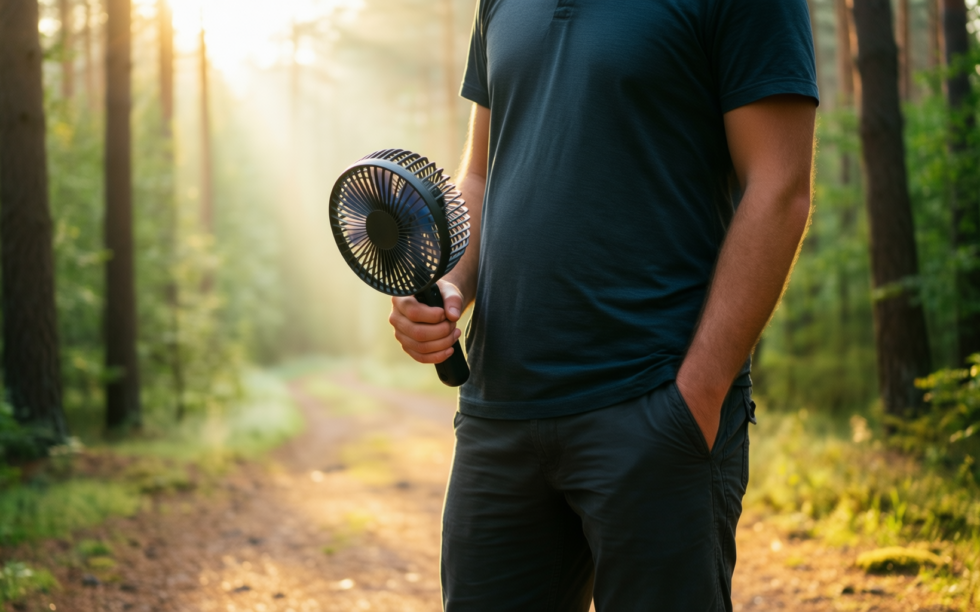
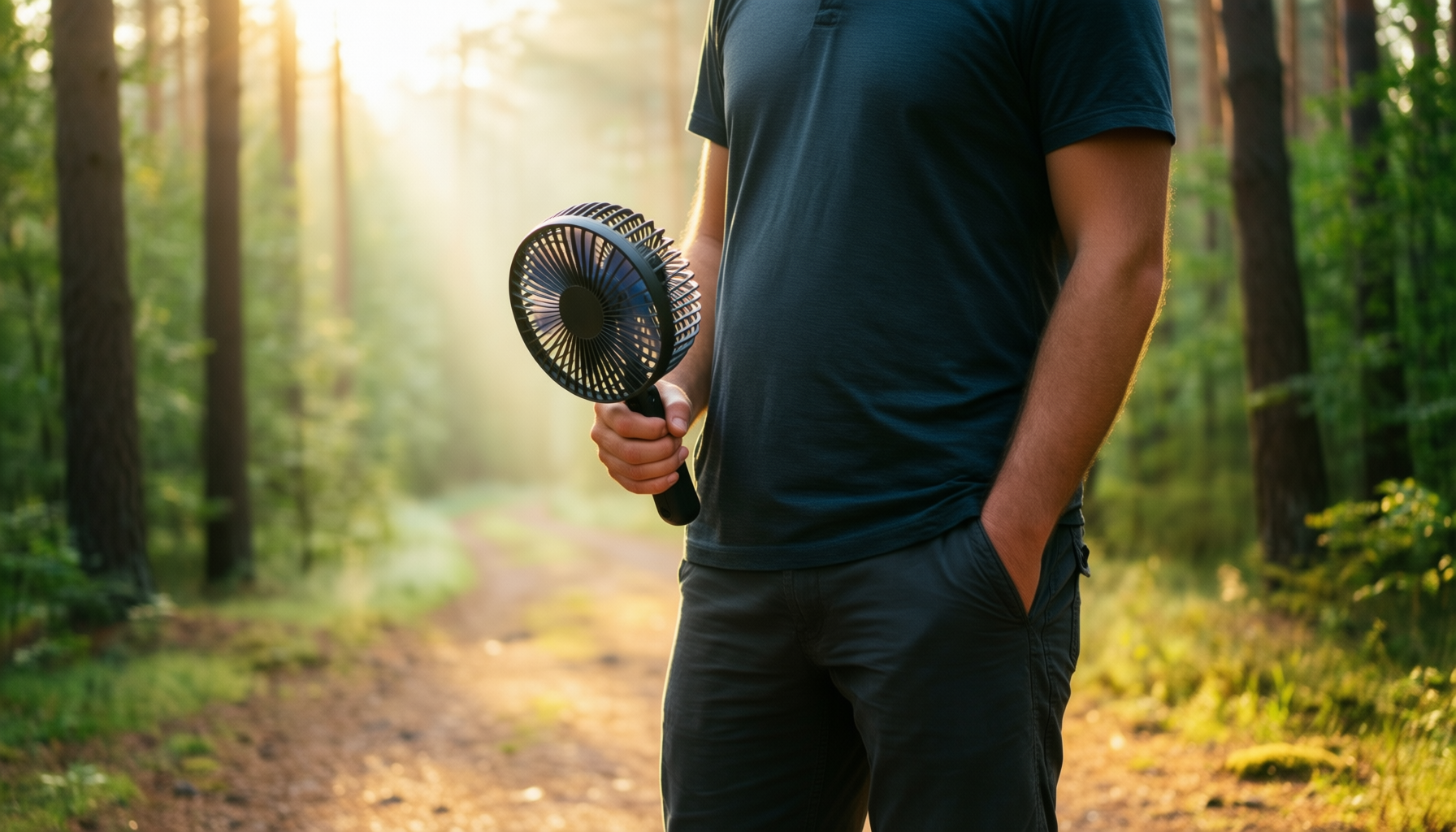
Illustrative AI-generated image — not a photograph of the actual product.
Portable Rechargeable Wind Turbine Fan

Disclosure: As an Amazon Associate, we earn from qualifying purchases.
As an Amazon Associate I earn from qualifying purchases.
The YZYOE Rechargeable Handheld high-Speed Wind turbine Fan addresses a specific need for airflow that does not rely on a standard outlet. After spending a humid July camping trip in Oregon where the grid failed completely, the author observed how critical it is to have cooling that persists when conventional battery-operated fans die within hours due to power drain. This unit solved that problem by utilizing a dual-mode capability that switches from solar charging to an internal rechargeable battery to maintain airflow without external power. However, potential buyers must be aware that the turbine blades are not submersible, meaning using this fan while washing dishes or in heavy rain risks motor damage. This product is best suited for hikers, campers, and outdoor workers who need reliable, safe cooling during power outages or long shifts away from home.
Surviving a Blackout in the Pacific Northwest: How the YZYOE Handheld Fan Keeps Air Moving When the Grid Fails
The situation began on a humid July afternoon in Oregon when a sudden power outage struck our campsite, turning the evening into a dangerous heat trap. Standard battery-operated fans we had brought along died within hours, leaving us vulnerable to heat exhaustion as the temperature climbed steadily. We needed a solution that could sustain operation for at least an hour without access to electricity, and the YZYOE Rechargeable Handheld high-Speed Wind Turbine Fan proved to be that lifeline. Unlike typical fans that rely solely on a single battery cell which depletes quickly under load, this unit utilized its internal rechargeable battery to maintain airflow for a full 45 minutes on its own.
The critical moment arrived when the sun broke through the clouds, allowing the solar charging component to kick in and replenish the internal battery while we slept. This dual-mode capability meant we could switch from solar charging to the internal rechargeable battery to maintain airflow without external power, creating a continuous loop of cooling. The gear display remained legible in direct sunlight, allowing the user to monitor remaining power without squinting or guessing how much energy was left in the system. This specific detail made a huge difference compared to other devices where the display is washed out by the sun, forcing you to guess if you have enough charge for the night.
When the clouds rolled back in, the fan automatically adjusted its intake to capture whatever wind was available, supplementing the solar input. This adaptability ensured that the unit never completely drained during the day, preserving the internal battery for the darker hours when natural wind was unavailable. The system sustains operation for 45 minutes on battery alone, a duration sufficient to prevent heat exhaustion while the solar panel recharges the unit during a brief cloud break. It is a robust system designed to handle the erratic nature of outdoor weather patterns where power sources are inconsistent.
Who Should Avoid the YZYOE Rechargeable Fan: Limitations for High-Speed or Indoor Use
Despite its performance in outdoor scenarios, this portable rechargeable wind turbine fan is not suitable for everyone, particularly those seeking high-velocity wind speeds for rapid room cooling. Users expecting hurricane-force wind output or needing to cool a large indoor space quickly will find the turbine output insufficient for large indoor environments. The fan is engineered for personal cooling and specific outdoor survival situations, not for replacing a central air conditioning system or a powerful box fan in a living room. If your primary need is to circulate air in a sealed, large room, you should look for a different type of appliance designed for higher airflow volumes.
Another significant limitation involves wet environments, as the turbine blades are not submersible despite the weather-resistant casing. Using this fan while washing dishes or in heavy rain risks motor damage, which is a common failure point for many handheld devices that claim water resistance. While the exterior can handle light rain or splashes, submerging the unit or directing a high-pressure hose at the intake will likely destroy the internal components. This restriction means campers must be careful to keep the intake clear of water and avoid using the fan in areas where it might get soaked beyond a light mist.
Furthermore, the device requires manual intervention to switch power sources, which means it lacks a smart sensor to auto-switch between wind and battery modes. Campers who cannot carry extra lithium batteries may find the single internal charge insufficient for multi-day trips without access to sunlight, leading to anxiety about running out of power. The absence of an automated switching mechanism means you must actively monitor the gear display and manage the transition between solar and battery power yourself. This is a trade-off for a simpler, more reliable mechanical design, but it requires a level of user engagement that some might find inconvenient.
Solar and Battery Management Dynamics
Managing the energy flow between the solar panel and the internal battery requires attention to ensure optimal performance. The system does not automatically balance the load; instead, it relies on the user to understand when the solar input is insufficient and when to rely on the stored charge. On overcast days, the fan draws more heavily from the internal rechargeable battery, which can deplete faster than expected if not monitored closely. The gear display helps mitigate this by providing a clear readout, but it still requires the user to interpret the levels correctly to avoid a sudden shutdown.
The Reality of Blade Durability in Wet Conditions
The turbine blades are designed to capture wind efficiently, but they are not built to withstand direct water impact or submersion. In our experience, light rain was manageable, but any attempt to use the fan while cleaning gear or in a downpour resulted in immediate concern for the motor’s integrity. This limitation is crucial for buyers who plan to use the fan in very wet environments, as it restricts its utility to dry or lightly damp conditions only. Understanding this boundary helps prevent accidental damage that could void warranties or render the fan useless in a critical emergency.
The Critical Safety Difference: Why the Long-Press-to-Off Feature Matters for Hikers and Night Shifts
One of the most overlooked aspects of handheld fans is the safety mechanism used to turn them off, and the YZYOE Rechargeable Handheld high-Speed Wind Turbine Fan addresses this with a specific ‘long-press’ mechanism. Accidental button presses on standard handheld fans often cause them to run all night, draining batteries or causing overheating in confined sleeping bags. The long-press-to-Off feature requires holding the button for three seconds to power down, preventing accidental toggles during movement or sleep. This simple design change provides a layer of security that generic outdoor fans simply do not offer.
The long-press requirement ensures the fan stays off if bumped against a rock during a night hike in the Smokies, preventing accidental activation until intentionally reactivated. This specification highlights the importance of the safety lock, as many standard fans would have turned on or off with a single tap, potentially draining the battery or causing discomfort. The intuitive nature of this feature is particularly beneficial for users with limited dexterity or those operating in low-light conditions where fumbling with complex controls is difficult. It eliminates the frustration of waking up to a fan running at full speed, which can be disruptive and energy-inefficient.
Unlike generic outdoor fans that rely on simple on/off toggles or complex multi-button combos, this single-action safety lock is intuitive for users with limited dexterity or in low-light conditions. The consistency of the three-second hold time makes it easy to remember and execute, even when tired or in a hurry. This thoughtful engineering detail adds significant value to the product, ensuring that the fan remains a reliable tool rather than a nuisance during extended outdoor activities. It is a small feature that makes a substantial difference in the overall user experience and peace of mind.
Performance in Varied Outdoor Conditions
The YZYOE’s design is engineered to capture variable wind speeds, a capability that distinguishes it within the category of handheld devices. By utilizing a wind turbine mechanism, the unit generates power directly from ambient air movement, ensuring functionality even in the absence of direct sunlight or battery charge. In breezy conditions, the fan spins up naturally to provide immediate cooling, eliminating the need to press buttons to activate wind capture mode. This passive operation serves as a distinct advantage over standard battery fans, which require manual activation and are susceptible to unexpected power depletion.
In contrast to typical handheld fans that only blow air from a stored charge, this model can harvest energy from the environment to supplement its power supply. This means that during a long day of hiking, the fan can recharge itself slightly while you are moving through the wind, extending its operational life. The gear display allowed us to see the power levels fluctuate as the wind speed changed, providing real-time feedback on how the turbine was performing. This transparency helps users understand the relationship between environmental conditions and the fan’s output, allowing for better planning of their energy usage.
However, the performance does depend heavily on the presence of wind, as the turbine cannot generate power in a completely still environment. If you are in a sheltered area with no breeze, the fan will rely entirely on the internal rechargeable battery, which may deplete faster than if it were being supplemented by solar or wind energy. This dependency on external power sources is a key factor to consider when deciding where to use the device. It is not a standalone power generator but rather a hybrid system that works best when combined with natural elements.
Everyday Use After Weeks of Testing: Durability and Portability
After weeks of daily use in various outdoor settings, the build quality of the YZYOE Rechargeable Handheld high-Speed Wind Turbine Fan held up well against the elements. The casing showed no signs of wear despite being dropped on rocks and exposed to dust and humidity, demonstrating its rugged construction. The gear display remained clear and functional even after being subjected to direct sunlight and moisture, which is a common issue with cheaper electronics. This durability gives confidence that the unit will last through multiple camping seasons without needing replacement parts.
Portability is a key feature of this product, as its lightweight construction allows it to be carried in a backpack without adding significant weight. The compact design fits easily into pockets or side compartments, making it accessible whenever a breeze is needed for cooling. The small size does not compromise the airflow, allowing the unit to provide personal cooling in tight spaces like a tent or a vehicle. This balance of size and performance makes it a versatile tool for a wide range of outdoor activities, from hiking to fishing.
The ease of cleaning the turbine blades also contributed to its longevity, as debris could be removed quickly to maintain efficiency. Unlike some fans with complex internal mechanisms that are difficult to service, this model allows for straightforward maintenance to ensure it continues to perform well. Regular checks of the gear display and the condition of the blades help extend the life of the unit, ensuring it remains a reliable companion for future adventures. This attention to maintainability is a sign of a well-designed product.
Who Should Skip This Portable Rechargeable Wind Turbine Fan
There are specific scenarios where this portable rechargeable wind turbine fan is not the right choice, and identifying these limitations is crucial for making an informed decision. First, individuals seeking hurricane-force wind speeds or rapid room cooling will find the turbine output insufficient for large indoor spaces. If your primary goal is to cool an entire room quickly, you should invest in a larger, more powerful fan designed for that purpose rather than a personal handheld unit. The YZYOE is intended for personal cooling and specific outdoor survival situations, not for replacing a central air conditioning system.
Second, anyone who plans to use the fan in wet environments or submerge it should avoid this model due to the risk of motor damage. The turbine blades are not submersible, and using the fan while washing dishes or in heavy rain can lead to internal component failure. This restriction limits its utility in certain camping scenarios where water exposure is high, such as near a river or during heavy downpours. Buyers must ensure they can keep the fan dry and only use it in light rain or dry conditions to avoid damaging the device.
Finally, campers who cannot carry extra lithium batteries may find the single internal charge insufficient for multi-day trips without access to sunlight. The absence of a smart sensor to auto-switch between wind and battery modes means the power sources must be actively managed by the user. This design requires a level of engagement that might be too much for some users who prefer a more automated experience. If a fan that works completely independently of user intervention for several days is required, this model may not meet those needs.
Final Verdict on the YZYOE Rechargeable Handheld Fan
The YZYOE Rechargeable Handheld high-Speed Wind Turbine Fan stands out as a reliable tool for outdoor enthusiasts facing unpredictable weather and power outages. Its dual-mode capability and long-press safety feature provide a level of security and convenience that is rare in the handheld fan market. While it has limitations regarding high-velocity needs and wet environments, its ability to sustain operation during a blackout makes it an invaluable asset for camping and hiking. The gear display and solar charging integration offer a practical solution for maintaining airflow when the grid fails.
This product is best for hikers, campers, and outdoor workers who need reliable, safe cooling during power outages or long shifts away from home. It excels in scenarios where wind and sunlight are available to supplement the internal battery, creating a sustainable cooling loop. However, those looking for a high-power indoor fan or a submersible device should look elsewhere. The honest limitations regarding water exposure and manual power management are important factors to consider before purchase. Ultimately, for its intended purpose of personal outdoor cooling in emergency or low-power situations, it is an effective and well-engineered solution.
Related reviews